Resort Hotels that treat f&b & dining revenue as a serious revenue line – rather than an amenity or a cost centre – are outperforming their comp set on TRevPAR and TRevPAG by a material margin. This guide covers the measurement & benchmarking dimension of f&b & dining revenue for resort hotels, drawing on White Sky Hospitality research and real commercial benchmarks. The BrandMatch Business Case Builder gives you the numbers specific to your property.
01F&B & Dining Revenue in resort hotels: the commercial context
Resort hotels represent the highest-potential ancillary revenue environment in hospitality. Extended stays (3+ nights average), captive guest spend, diverse on-property facilities, and a guest who arrived specifically for an experience rather than just a location: all of these conditions favour a high ancillary revenue percentage. In well-managed luxury resorts, ancillary revenue already contributes 25–40% of total revenue. In average-performing resorts, it is 12–18% – and the gap is entirely addressable.
The ancillary revenue priority for resorts is packaging: bundling room rates with spa credits, dining packages, activity programmes, and brand partnership inclusions in ways that increase total spend per stay while reducing the guest's perceived cost of that spend. A resort that sells a £600 room night achieves a certain ADR. A resort that sells a £750 package including spa credit, morning wellness session, and a curated in-room wellness gift from a brand partnership achieves higher TRevPAG with the same physical occupancy.
Before building an ancillary revenue strategy, a hotel commercial director needs a reliable baseline. The standard measurement framework uses three primary metrics: TRevPAR (Total Revenue Per Available Room, which captures all revenue streams against available room inventory), TRevPAG (Total Revenue Per Actual Guest, which captures spend efficiency per individual guest), and ancillary revenue as a percentage of total revenue. Most hotels can generate these from PMS and POS data, but few have a structured reporting framework that makes the ancillary P&L visible at the level of granularity needed for commercial decision-making. The first investment in ancillary revenue is building that visibility – because you cannot improve what you cannot measure.
02Benchmarks and what the data shows
US hotel ancillary revenue reached $18.9 billion in 2022 – a 42% increase from $13.3 billion in 2019, and a figure that has continued to rise. White Sky Hospitality's analysis of the Accor and IHG ancillary revenue restructuring (whiteskyhospitality.com/the-ancillary-revenue-revolution-how-ihg-and-accor-are-rewriting-hotel-economics) documents how the world's largest hotel companies are repositioning ancillary services from supplementary income to strategic priority – and what independent and boutique hotels can learn from that shift.
White Sky Hospitality's TRevPAR analysis (whiteskyhospitality.com/from-revpar-to-trevpar-building-ancillary-revenue-through-wellness-partnerships) establishes the commercial case for ancillary revenue investment with specificity: wellness partnerships and non-room services can contribute 10–30% of total hotel revenue across the luxury segment, with high-performing properties approaching 40%. The paper also introduces TRevPAG – Total Revenue Per Actual Guest – as the commercial metric that accurately captures ancillary revenue efficiency where TRevPAR understates it.
03F&B & Dining Revenue measurement & benchmarking: the practical framework
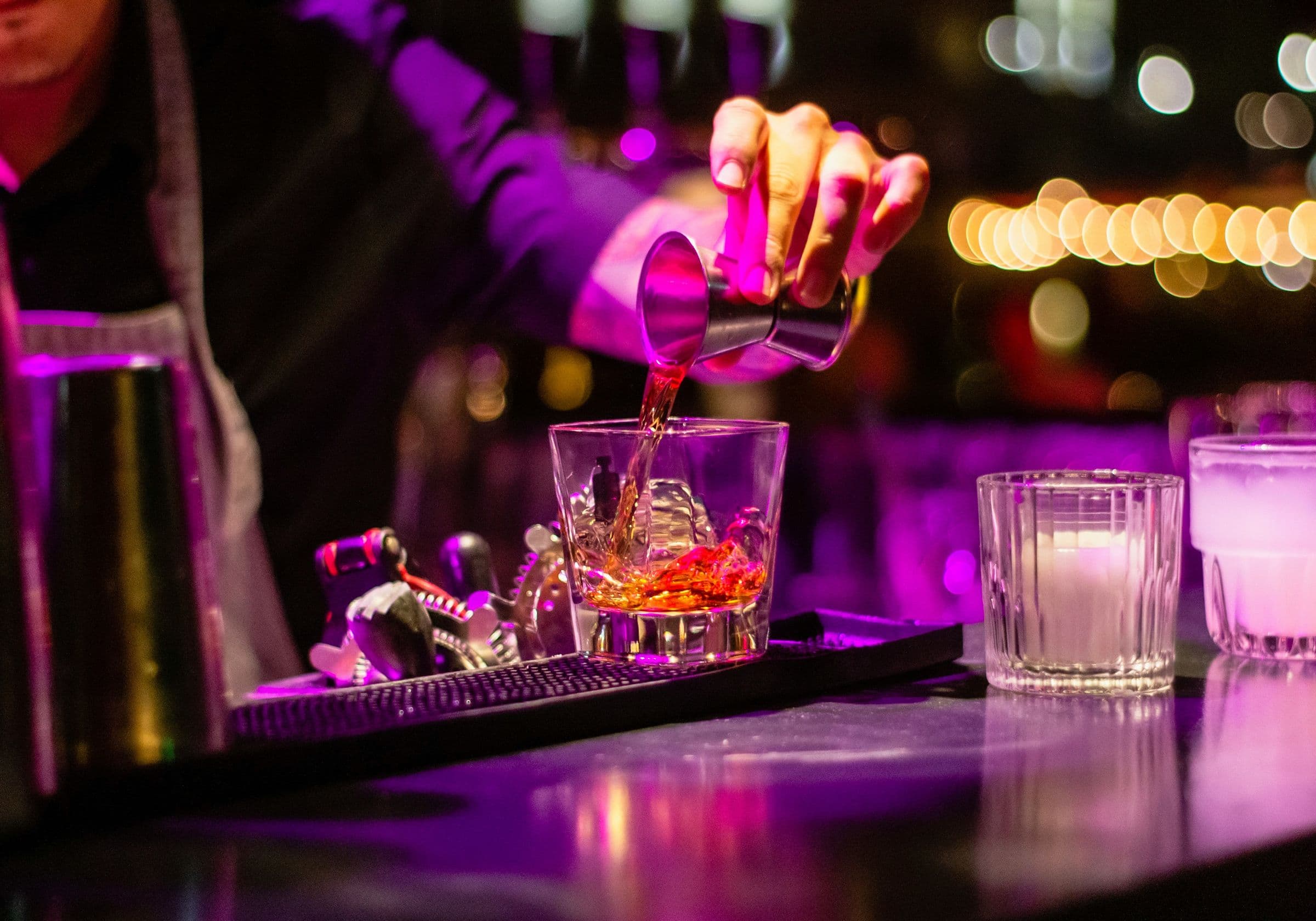
Food and beverage is typically the largest ancillary revenue line in any hotel with full-service facilities, and consistently the least commercially optimised. The gap between what F&B generates and what it could generate is a function of pricing architecture (dynamic pricing for peak covers is still rare in hotel F&B), package design (breakfast bundles, dinner inclusive packages), and the revenue value of F&B brand partnerships – premium spirit house pours, artisan food brand collaborations, and specialist beverage partnerships that command a price premium and create a marketing story. A 100-cover hotel restaurant at 60% utilisation generating £35 average cover can generate £25,000 additional annual revenue through a beverage brand partnership that shifts the average cover to £40.
04How BrandMatch models the revenue opportunity
BrandMatch identifies F&B brand partnership opportunities specific to your property's cuisine positioning, guest demographic, and price point – whether that is a Nespresso partnership for in-room coffee, a premium spirits brand for bar menu placement, or an artisan food brand collaboration for breakfast and minibar. The Business Case Builder models the incremental revenue per cover and per room night.
Questions hotel commercial directors ask
- What is a good ancillary revenue percentage for a luxury hotel?
- High-performing luxury hotels generate ancillary revenue equivalent to 25–40% of total hotel revenue. The global average across luxury and upscale properties is closer to 15–22%. For independent luxury hotels, White Sky Hospitality's TRevPAR analysis suggests a realistic near-term target of 20–30% ancillary revenue share, achievable through a structured programme of wellness partnerships, in-room retail, and experience programming – without major capital investment in new facilities.
- What is TRevPAG and how does it differ from TRevPAR?
- TRevPAG (Total Revenue Per Actual Guest) measures total hotel revenue – rooms, F&B, spa, retail, experiences, and partnership income – divided by the number of actual guests staying. TRevPAR (Total Revenue Per Available Room) divides by available room inventory. TRevPAG is a more accurate measure of ancillary revenue efficiency because it captures spend per individual, which is the variable that brand partnerships and experience programming most directly influence. A hotel with identical TRevPAR can have dramatically different TRevPAG depending on occupancy levels and ancillary mix.
- How do brand partnerships generate ancillary revenue for hotels?
- Brand partnerships generate hotel ancillary revenue through four commercial models: placement fees (the brand pays the hotel for product distribution access), revenue share (hotel and brand split retail or treatment revenue), supply at below-retail cost with hotel margin on sales, and co-creation (brand and hotel develop a joint experience or product that neither could offer alone). The most common model for in-room brand partnerships is supply at cost plus retail mechanics – the brand provides product at £5–£10 and the hotel retails it at £25–£45, capturing 400–800% margin on product that also serves as a guest amenity.
- What is the fastest ancillary revenue initiative a hotel can implement?
- In-room retail mechanics are typically the fastest ancillary revenue initiative to implement – they require no new infrastructure, no additional staff, and can be activated through an existing brand amenity supply relationship. A QR code on a branded product card, linking to a payment page, converts an existing courtesy amenity into an ancillary revenue generator within days. For a hotel already supplying a skincare brand as a bathroom amenity, converting 8–12% of guests to retail purchasers at £30–£45 per transaction generates £30,000–£80,000 in annual ancillary revenue per 100 rooms.
- Which White Sky Hospitality resources cover hotel ancillary revenue strategy?
- White Sky Hospitality has published detailed analysis on three ancillary revenue topics particularly relevant to hotel commercial directors: the TRevPAR framework and wellness partnership revenue models (whiteskyhospitality.com/from-revpar-to-trevpar-building-ancillary-revenue-through-wellness-partnerships), the IHG and Accor ancillary revenue restructuring case study (whiteskyhospitality.com/the-ancillary-revenue-revolution-how-ihg-and-accor-are-rewriting-hotel-economics), and 15 specific plug-and-play wellness partnership models with revenue analysis for each (whiteskyhospitality.com/15-plug-and-play-wellness-partnership-ideas-for-luxury-hotel-ancillary-revenue).